Thursday, January 29, 2009

The 2009 Christian Writers Market Guide Is Here!

For twenty-four years Sally E. Stuart has brought us the must-have reference book for Christian writers seeking to find a publisher of their work. I've been reading it for many years, and it's one of those books you might not use every day, but when you need it it's a huge help.

I'm always most interested to find out how the guide's changed from year to year. What's been added, subtracted, that sort of thing. This year Ms. Stuart starts her introduction thus: "The Christian publishing industry continues to change."

These words sum everything up perfectly. Nothing ever remains the same, especially in publishing. Just this year we've seen many, many magazines go under. Publishers have re-structured, often eliminating jobs.

But let's not let change discourage us. Because if there's no change we stay in a rut. Who wants to wallow in a rut? I see these changes as the way the industry is weeding out those who aren't serious. What remains will be those writers who are professional, serious about their craft, and determined not to give up---no matter what happens next.

So needless to say, with all the changes many entries in this guide are no longer up-to-date. That's it's one downside and something the author and publisher can't control. Let it be a reminder to always check and see if a particular editor is still at the periodical or house you're targeting. But with that said, there's essential info here. Publisher addresses, needs, whether they accept unagented authors, average first print runs, etc.

Some statistics about this year's guide:
  • 1,000 markets for the written word
  • 416 book publishers (33 new)
  • 654 periodicals (52 new)
  • 98 literary agents
  • 121 new listings in the Resources for Writers (now exclusively on the CD included at the back of the book)
...and more! So if you have any inclination to publish in the Christian marketplace, pick up a copy of the 2009 Christian Writers Market today! Click here to purchase at Amazon.com.

Monday, January 26, 2009

Cast Your Vote On How Randy Singer Ends The Justice Game

Coming in July 2009 from Tyndale House is Randy Singer's next legal thriller, The Justice Game. Not only does it have a very cool cover, but Randy's doing something unique with this book---he's letting YOU decide the ending. That's right. Up on his website is a video he made showing us the closing arguments of the two opposing lawyers. Both make sense. But only one can win. Randy's going to end the book with whatever side we choose. I've cast my vote. Now it's your turn.


Watch the video below or click here to watch. Then visit Randy's website to cast your vote.


Read my interview with Randy Singer.
Read my review of By Reason of Insanity.

Tuesday, January 20, 2009

Davis Bunn (Advice for Novelists, Part 87)

Today marks another entry in our Advice for Novelists series in which editors, authors, agents and publicists answer the question:

"If you could say one thing to aspiring novelists, what would you say?"

Here's Davis Bunn's response:

Remember that your first novel is not your profession. Accept that the craft of writing good fiction is a learning process. Focus upon the long term, and dedicate yourself to the craft.

--Davis Bunn, multi-published author of The Centurion's Wife (w/ Janette Oke), My Soul To Keep, All Through the Night, and many more. Visit his website to learn more.

Friday, January 16, 2009

The Rivers Run Dry by Sibella Giorello

My review of The Rivers Run Dry by Sibella Giorello won't be officially posted on TitleTrakk.com for weeks (and the novel doesn't release until late Feb., early March), but I just had to share my thoughts on this terrific novel with someone.

So, friends, here's an excerpt, and the top secret link to the full review. :)

Sibella Giorello’s first book The Stones Cry Out placed her on our radar. It won a Christy award for 1st novel and introduced us to an author whose storytelling ability and knack for description caused me to call the book “one of 2007's most compelling novels”. Needless to say, Giorello had a lot to live up to in The Rivers Run Dry. Would Raleigh Harmon remain the interesting, three-dimensional character we’d come to love?

Find out what I thought by reading my review.

Wednesday, January 14, 2009

Erin Healy (Advice for Novelists, Part 86)

Today we hear from an editor and author in Advice for Novelists series. In this series I've asked authors, agents, editors and publicists their response to the question:

"If you could say one thing to aspiring novelists, what would you say?"

Learn the craft. Learn how to respect it before you attempt to do anything subversive. Learn what moves your audience. Learn how to expose yourself and your work to the honest opinion of others, especially people who don’t like what you’ve written. Learn, learn, learn. “Your job,” write the authors of Art and Fear, “is to learn to work on your work.” And keep a lot of chocolate on hand. It enhances the retention of studying.

--Erin Healy, co-author with Ted Dekker of the novel Kiss. Founder and Editor at WordWright Editorial Services. Visit her online at her website.

Tuesday, January 13, 2009

New blog on the block -- Novel Matters

Novel Matters is a new blog focusing on writing technique from seven fiction authors. It looks like it's going to be a great resource. Check it out here. And now, the bios of the authors:

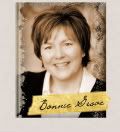
Bonnie Grove is our Canadian author. Her debut novel Talking to the Dead (David C. Cook) will hit shelves June 1 2009 and available online a bit sooner. She is at work on her second novel which is about a woman framed for murder, coming spring 2010 by David C. Cook. You can find her at her web site and at the popular blog Fiction Matters . You can follow her on Twitter and check out her daily updates on Face Book. Her keyword is: mouthy.


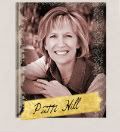
Patti Hill is the author of Christy-finalist Like A Watered Garden, and two other books in the Garden Gate series, Always Green and In Every Flower (all published by Bethany House). Her newest is The Queen of Sleepy Eye (B&H Fiction), and she’s working now on something whimiscal, yet grounded. Huckleberry Finn happens to show up as a character. Hmm. Her keyword is: winsome (is this a surprise?) You can visit Patti at http://www.pattihillauthor.com/ or follow her twitterings at: http://twitter.com/PattiHill.

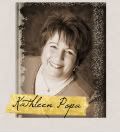
Kathleen Popa’s first book, To Dance in the Desert was followed by the just-released The Feast of St. Bertie (both published by David C. Cook). The novel she's working on now is titled Honey, Bea & Sky. Check in with her at her website or at her blog, Ever Mindful. You can also follow her on Twitter and on Facebook . Her keyword is: quirky.


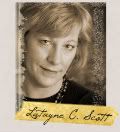
Latayne C. Scott is a nonfiction writer of 13 books turned to fiction. Her first novel, Latter-day Cipher (Moody) will be published in April. She’s working on another novel about the author of the book of Hebrews. Her keyword is: controversial. Her Web site is http://www.latayne.com/


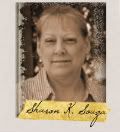
Sharon K. Souza’s first book, A Heavenly Christmas in Hometown (which was also a adapted as a play) was followed by two novels published by NavPress in 2008: Every Good and Perfect Gift and Lying on Sunday. Her newest project is titled Unraveled. Her keyword is: optimist. You can visit her website and follow her on Twitter.


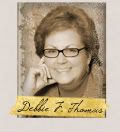
Debbie Fuller Thomas debuted her novel Tuesday Night at the Blue Moon (Moody Publishers) in June 2008. She's working on her second novel for Moody, Raising Rain, which will be available in September 2009. You can visit her website, and follow her on Twitter. Her keyword is: tenacious.


Jennifer Erin Valent is the sweet young thing talent among us. Her first novel, Fireflies in December, will be published by Tyndale House in January 2009. Currently, she is working on the sequel to Fireflies In December, tentatively titled Cottonwood Whispers. More information can be found at her website, http://www.jennifervalent.com/. Her keyword is: chatty

Saturday, January 10, 2009

Do You Have A Prince Caspian Spirit?

It's no secret my main goal as a writer is to have my novels published. I think it's the goal of many writers. But as I near the 12 year mark on my writing journey I've begun to ask myself, "Am I really ready to be published?"

A few days ago I said, "Yes, of course I'm ready. I've been been learning non-stop for twelve years. I'm more than ready!"

But as I got to thinking about this, a change came over me. I think it was the Lord tempering my zeal (in a good way). And believe it or not, I thought of Prince Caspian.

Remember in the book (and movie) where Aslan asks him if he's ready to be King of Narnia? His response was hesitation. He wasn't sure if he was. And Aslan said, in effect, "If you had said you were, it would have proven you weren't."

I realized that by admitting my uncertainties of being a published novelist I was actually in a better place than if I'd been cocky and sure. Granted, it's okay to have confidence. But is my heart in the right place? Am I clothing myself with humility and a teachable spirit? I hope my answer will always be yes to that question.

And here right now is another example of the power of story. C.S. Lewis penned Prince Caspian fifty years ago, before computers, the internet, Twitter, Blogger, and the like. And here I am writing about learning from his book.

Wednesday, January 07, 2009

Fireflies in December by Jennifer Erin Valent

It's time to play a Wild Card! Every now and then, a book that I have chosen to read is going to pop up as a FIRST Wild Card Tour. Get dealt into the game. (Just click the button.) Wild Card Tours feature an author and his/her book's FIRST chapter!

Today's Wild Card author is:
I recently read and reviewed this novel on TitleTrakk.com. Here are some excerpts from the review:

The summer I turned thirteen, I thought I’d killed a man.

In these first eleven words of Fireflies in December we realize Jessilyn Lassiter’s world is pregnant with change. Not only is she walking that tenuous line between childhood and womanhood, but during the summer of 1932 Jessilyn finds herself in the crosshairs of man’s hatred for his fellow man...

Fireflies in December is a tight, finely crafted novel that challenges us to root out any hint of prejudice in our own hearts, whether we’re black or white, male or female, rich or poor. That’s a message that’ll stand the test of time.

Read the whole review here.

ABOUT THE AUTHOR:


Jennifer Erin Valent is the winner of the Christian Writers Guild’s 2007 Operation First Novel contest for Fireflies in December, her first published novel. When she’s not penning novels, Jennifer works as a nanny and freelance writer in Richmond, VA.

Visit the author's website.


AND NOW...THE FIRST CHAPTER:


The summer I turned thirteen, I thought I’d killed a man.

That’s a heavy burden for a girl to hang on to, but it didn’t surprise me so much to have that trouble come in the summertime. Every bad thing that ever happened to me seemed to happen in those long months.

The summer I turned five, Granny Rose died of a heart attack during the Independence Day fireworks. The summer I turned seven, my dog Skippy ran away with a tramp who jumped the train to Baltimore. And the summer I turned eleven, a drought took the corn crop and we couldn’t have any corn for my birthday, which is what I’d always done because my favorite food was corn from Daddy’s field, boiled in a big pot.

To top it off, here in the South, summers are long and hot and sticky. They drag on and on, making slow things seem slower and bad things seem worse.

The fear and guilt of the summer of 1932 still clings to my memory like the wet heat of southern Virginia. That year we had unbearable temperatures, and we had trouble, just that it was trouble of a different kind. It was the beginning of a time that taught me bad things can turn into good things, even though sometimes it takes a while for the good to come out.

The day I turned thirteen was one of those summer days when the air is so thick, you can see wavy lines above the tar on the rooftops. The kind of day when the sound of cicadas vibrates in your ears and everything smells like grass.

On that day, as Momma got ready for my birthday party, I told her that I wanted nothing to do with watermelon this year.

“We have some fine ones,” she told me. “Just don’t eat any.”

“But the boys will spit the seeds at us like they do all the time,” I said. “And they’ll hit me extra hard today since it’s my birthday.”

“I’ll tell them not to,” she said absentmindedly as she checked her recipe again with that squinched-up look she always got when trying to concentrate.

I knew I was only another argument or two from being scolded, but I tried again. “Those boys won’t listen to you.”

“Those boys will listen to me if they want to eat,” she replied before muttering something about needing a cup of oleo.

“They don’t even listen to Teacher at school, Momma.”

That last reply had done it, and I stepped back a ways as Momma picked up her wooden spoon and peered at me angrily, her free hand on her apron-covered hip. “Jessilyn Lassiter, I won’t have you arguin’ with me. Now get on out of this house before your jabberin’ makes me mess up my biscuits.”

I knew better than to take another chance with her, and I went outside to sit on my tree swing. If God wasn’t going to send us any breeze for my birthday, I was bound and determined to make my own, so I started pumping my legs to work up some speed. The breeze was slight but enough to give me a little relief.

I saw Gemma come out of the house carrying a big watermelon and a long knife, and I knew she had been sent out by her momma to cut it up. Gemma’s momma helped mine with chores, and her daddy worked in the fields. Sometimes Gemma would help her momma with things, and it always made me feel guilty to see her doing chores that I should have been doing. So I dug my feet into the dry dirt below me to slow down and hopped off the swing with a long leap, puffing dust up all around me.

I wandered to the picnic table where Gemma was rolling the green melon around to find just the right spot to cut into. “I guess this is for my party.”

“That’s what your momma says.”

“Are you comin’?”

“My momma never lets me come to your parties.”

“So? Ain’t never a time you can’t start somethin’ new. It’s my party, anyways.”

“It ain’t proper for the help to socialize with the family’s friends, Momma says.”

“Your momma and daddy have been workin’ here for as long as I can remember. You’re as close to family as we got around here, as I see it. I ain’t got no grandparents or nothin’.”

Gemma scoffed at me with a sarcastic laugh. “When was the last time you saw one brown girl and one white girl in the same family?”

I shrugged and watched her slice through the watermelon, both of us backing away to avoid the squirting juices.

“Looks like a good one,” Gemma said as the fragrant smell floated by on the first bit of a breeze we’d seen all day.

“All I see are seeds for the boys to hit me with.”

“Why do you let them boys pick on you?”

“I don’t let ’em. I always push ’em or somethin’. But they’re all bigger than me. What do you want me to do? Pick a fight?”

“Guess not.” A piece of the melon’s flesh flopped onto the table as Gemma cut it, and she popped it into her mouth thoughtfully. “I’ll never know why boys got to be so mean.”

“It’s part of their recipe, I guess.” I helped by piling the slices on a big platter, and I strategically picked as many seeds as I could find off the pieces before I stacked them. Never mind my dirty hands. “You come by around two o’clock,” I told her adamantly. “I’ll get you some cake and lemonade. You’re my best friend. You should be at my party.”

Gemma shushed me and shoved an elbow into my ribs as her momma went walking by us.

“Gemma Teague,” her momma said, “you girls gettin’ your chores done?”

“Ain’t got no chores of my own, Miss Opal,” I told her. “I figured on helpin’ Gemma instead.”

“Then you two make certain you keep your minds on your work, ya hear?”

“Yes’m,” we both mumbled.

Gemma’s momma walked past, but she looked back at us a couple times with a funny look on her face like she figured we were planning something.

In a way we were, but I didn’t see it as being a big caper or anything, so I continued by saying, “You know, I ain’t seein’ any sense in you not at least askin’ your momma if you can come by for cake. She’s usually understandin’ about things.”

“Every year it’s the same thing from you, Jessie. She won’t let me come, and besides, I’ll bet your momma don’t want me here no more than my momma does. It just ain’t done.”

“‘It just ain’t done’!” I huffed. “Who makes up these rules, anyhow?”

Gemma kept her eyes on her work and said nothing, but I knew her well enough to see that she didn’t understand her words anymore than I did.

Momma called me from the open kitchen window, but I ignored it and kept after Gemma. “Now listen. You just come on by after we’ve cut the cake and pretend to clean up somethin’, and I’ll be sure you get some.”

“Ain’t no way I’m gettin’ in trouble for some cake and lemonade that I’ll get after the party anyhow,” she argued. “You’re just bein’ stubborn.”

I sighed when Momma called me again. “She’s gonna tell me to take a bath, I bet. You’d think at thirteen I’d be old enough to stop havin’ my momma order me to take baths.”

“You’d never take one otherwise,” Gemma said. “Ain’t nobody wants to smell you then.”

“I hate takin’ baths on days this sticky. My hair never dries.”

“Takin’ a bath on a hot day ain’t never bad.”

“It is when the water’s hot as the air is.”

Gemma shook her head at me like she always did when I was being hardheaded. “Water’s water. Cools you off any which way.”

I didn’t believe her, but I headed off to the kitchen, where Momma had filled the big metal tub we’d had to take baths in ever since the bathroom faucets broke. The sheet she’d hung across the doorway into the next room flapped as the breeze I’d prayed for began to pick up.

I hopped out of my dungarees in one quick leap and crawled into the tub. “It’s hot as boiled water,” I complained.

“Well then, we’ll have you for supper,” Momma replied as she measured out flour, obviously undisturbed by my discomfort. “Your guests will start gettin’ here in a half hour, so don’t dawdle unless you want everyone findin’ you in the tub.”

“Yes’m.”

“And don’t forget to clean behind your ears.”

“Yes’m.”

Water splashed as I washed with my usual lack of grace, landing droplets about the kitchen floor. It didn’t really matter since Momma always made a mess when she cooked and the floor would need cleaning after she was done. No doubt the flour and water would mix into a fine paste, though, and she’d have a few words to mutter as she tried to scrub it up. As she measured sugar, I could hear her praying, “Oh, dear Jesus, let me have enough.” Momma prayed about anything anytime, anywhere.

By the time I’d scrubbed and dried, the smell of biscuits was drifting through the house and Momma was putting the oil on for the chicken. She was a good cook, no matter the mess, and she always put on quite a show for these birthday parties.

As I walked up to my room, wrapped in a ragged blue towel, I heard Momma call after me not to forget to put on my dress. Then she added, “Please, Lord, let the girl look presentable.” I think Momma often wondered why, if she was to be blessed with a girl, she had to get one that mostly acted like a boy.

“No dungarees!” she added. “And put on your church shoes.”

I rolled my eyes, knowing she was nowhere near me. I would never have dared to do it in front of her. I hated dressing up, but for every birthday, holiday, church day, and trip into town, I had to wear one of the three dresses that Momma had made me. She was as fine with a needle as she was with a frying pan, but I hated dresses nonetheless. Mostly because when I wore them, I had to sit all proper in my chair, and I couldn’t do cartwheels, at least not without getting yelled at. But I put on the dress because I had to and buckled up my church shoes.

I could hear Daddy’s footsteps coming down the hall, and I turned to smile at him as he stopped at my doorway.

“Lookin’ pretty, dumplin’,” Daddy said.

“That’s too bad.”

“Now, now. Ain’t nothin’ wrong with a girl lookin’ like a girl.”

“Who says wearin’ dresses is the only way to look like a girl?”

Coming into the room, his dirty boots leaving marks that Momma would complain about later, Daddy tossed his hat onto a chair and helped me finish tying the bow on the back of the dress. “We don’t make the rules; we just follow ’em.”

“Well, someone had to make the rules in the first place. We should just make new ones.”

“No doubt you will one day, Jessilyn,” he said with a sigh. “But for now, you’d best follow your momma’s instructions. She ain’t one to be disobeyed.”

“Are you gonna be at the party?” I asked hopefully, knowing full well that he’d been in the fields all morning and looked in need of a nap.

“Wouldn’t miss it, you know that. I got the corn on already.” Daddy rubbed his tired eyes, picked up his hat, and walked out, whacking the hat against his leg to loosen the dust.

He worked hard, especially this time of year, and no matter how many men were willing to work the fields, he would always put in his fair share alongside them. I had suspected of late, however, that he was working harder more out of necessity than a sense of duty. We’d had fewer men to help than in years past, and it wasn’t due to lack of interest, I was sure. I’d seen my daddy turn three men away just the day before.

Things were poor, especially in our parts, and for having a working farm and a good truck, we were fortunate. We even had some conveniences that other people envied, like a fancy icebox and a telephone, and Momma was pretty proud of that. We weren’t rich like Mayor Tuttle and his wife, with their big columned house and fancy motor car, but we were thought to be well-off just the same. Momma and Daddy never talked money in front of me, and I decided not to fuss with it. It caused too many problems for adults from what I could see. What did I want to do with it?

I made my way downstairs and stepped out onto the porch, disappointed to see Buddy Pernell was the first to arrive. I didn’t like Buddy very much. But then, I didn’t like many kids very much. I thanked him for coming—mainly because Momma’s glare told me to—and received the plate of cookies his momma handed me. In those days, we didn’t give gifts at parties; it was too extravagant. But every momma felt it only proper to bring some sort of favor along.

By the time we had a full crowd, one side of the food table was filled with jars of jelly, bowls of sugared strawberries, a couple pies, and even one tub of pickled pigs’ feet. I promptly removed those, but Momma stopped me cold.

“We accept all gifts with thanks, Jessilyn,” she hissed in my ear as she replaced the tub on the table.

“Even pigs’ feet?” I argued.

“Yes ma’am! Even pigs’ feet.”

It took only ten minutes before the first watermelon seed landed in my hair. All the other girls started screaming and ran for cover, but I fought back at the boys out of sheer pride. I did a little shoving, Momma did some yelling, but I got pummeled anyhow.

After we finished eating lunch, I spotted Gemma hanging laundry on the line and ran over to get her help brushing all those sticky seeds out of my hair.

“You ought to not let ’em do this to you,” she said.

“I told you before,” I said with my eyes shut tight to stand the pain of Gemma’s brushing, “they’re all bigger than me.”

“I think they’re too big for their britches. That’s the problem.”

“Maybe so, but that don’t change nothin’. I still can’t whip ’em.”

“Well, I did the best I could.” Gemma peered closely at my sun-streaked hair. “I can’t see no more.”

“Just wait till we go swimmin’,” I told her. “I’ll find some critter to stick down Buddy Pernell’s knickers. He’s the one leadin’ the boys in the spittin’.”

“You best be careful. Them boys might do somethin’ to hurt you back.”

“I ain’t scared of them,” I lied. “Besides, they got it comin’.”

Gemma shook her head and grabbed a pair of Daddy’s socks to hang on the line. “You’re stubborn as a mule, Jessie.”

I figured she was right, but I wasn’t about to give her the satisfaction of hearing me say it. Instead, I rejoined the party, grabbed a piece of cake, and stood by watching the boys scuff about with each other, playing some kind of roughhouse tag. The other girls stood around watching the boys, giggling over how cute this one was and how strong that one was. I couldn’t figure them out.

“All that fussin’ over boys,” I said through a mouthful of frosting. “If you girls had any smarts, you’d be playin’ tag right along with ’em.”

“Why don’t you?” Ginny Lee Kidrey asked.

“I’m eatin’. Ain’t no reason to stuff down cake when I can play tag anytime I want.”

“You’re just a tomboy, Jessie Lassiter,” said Dolly Watson, who always wore dresses and perfume that smelled like dead roses. “What do you know about boys?”

“Enough to know that they ain’t worth wastin’ time on.”

The girls turned their noses up at me—all but Ginny Lee, who was the only real friend I had outside of Gemma, and even she had started to become more like the other girls of late.

The only reason I even had those other children at the party was because Momma insisted on it. She liked entertaining guests, but in our parts we didn’t have much chance to entertain, and she took every chance she got. So every year I had to invite the kids from school to interrupt my summer vacation and celebrate my June birthday with a party. The only thing I ever liked about those parties was the food. I would have been satisfied to spend my birthday having boiled corn with Gemma.

Buddy Pernell stopped in front of me and tugged at my braid. “Still stuffin’ your face?” he asked with a smirk. “Don’t you like to do nothin’ but eat?”

Knowing my short temper, all the boys loved to tease me just to see how much they could rile me. I responded to Buddy in my usual way. “I just like standin’ here watchin’ you boys beat each other up. And besides, ain’t nothin’ wrong with eatin’.”

“There is if it makes you fat.”

“I ain’t fat!”

“You keep eatin’ like that and you’ll be fat as your momma.”

Now, my momma wasn’t fat. I knew that as well as I knew that Buddy Pernell’s momma was. But it didn’t matter. True or not, he’d insulted my momma, and it took me no time at all to react by shoving what was left of my cake right into Buddy’s face, making extra sure to push upward so the frosting would fill his freckled nose.

Buddy wasn’t so brave then. He began clawing at his face like I’d thrown acid on it, crying something fierce about not being able to breathe.

Momma ran over, hysterical, simultaneously scolding me and coddling Buddy. I responded to her by saying I’d never heard of anyone suffocating on cake before, but she didn’t appreciate my rationalizing. I got a whack from her left hand and Buddy got a wipe across his face from her right.

The other boys were laughing, throwing insults at Buddy about how he’d gotten shown up by a girl, but he was too worried about not being able to breathe through his nose to hear them.

I watched with a smile as Buddy’s momma grabbed a cloth and ordered him to blow his nose into it. Buddy blew like his brains needed to come out, and eventually he found that he was able to breathe right again, although his momma insisted on getting a good look up his nose to be certain that it was clear of frosting.

The boys loved the picture of Buddy having his nose inspected by his momma, and they couldn’t get enough of the jokes about it.

I got hauled into the house for a scolding and a whipping. I tried telling Momma that thirteen was too old for whippings, but she said if I was acting like a child, I should be punished like one. Every time I got another whack with that wooden spoon, I thought of a new way to make Buddy pay for the walloping. After all, if he hadn’t made fun of my momma, I wouldn’t have made him snort up that cake.

I took my punishment without explaining because I didn’t want to hurt Momma’s feelings by telling her what Buddy had said, and I made my way slowly and sorely back out to the party with revenge in my mind.

Gemma saw the silent tears that I’d been biting my lip to keep from letting out, and she came over to wipe them with her apron.

I smiled at her halfway. “I’m okay. At least I will be once I get back at Buddy.”

“Get back at him? He’s the one who’ll be wantin’ to get back at you.”

“Just let him try. I wouldn’t have gotten that whippin’ if he hadn’t made fun of my momma in the first place.”

“Don’t you go talkin’ like that. He’s already got it in for you, and if you do anythin’ else, he’ll go and do somethin’ awful.”

“I ain’t afraid of him!”

Gemma shook her braided head at me. “You talk tough, but you won’t be so tough if Buddy Pernell hurts you bad.”

I sniffed at her like she was worrying over nothing, but I knew deep down that I could have been asking for trouble by playing with Buddy. Boys with no sense can be dangerous, my momma had told me a few times, but my stubbornness didn’t leave any room for being cautious. I was determined to hold a grudge against Buddy, and that was that. But I could see that Buddy was keeping his eye out for his first chance to get back at me, and I watched him with a little worry in my heart as he and the other boys stood together in whispers.

I tried to pretend I wasn’t nervous, and when Gemma got called into the house, I joined the other girls, who’d gone back to twirling their hair and talking about the boys.

With the boys standing around making plans and the girls standing around watching them, my mother got irritated and told us to find something active to do. “Go on down to the swimmin’ hole. Get some exercise, for land’s sake.”

All of us girls went to my bedroom to put on our swimming suits, but with a knot in my stomach and a lump in my throat, I changed slower than them all. Gemma had been right, I figured. I’d be paying, and good, and the perfect place for Buddy to get me would be at the secluded swimming hole.

After I’d changed, I went downstairs to find my momma. “Maybe we shouldn’t go to the swimmin’ hole,” I told her while she was making up another batch of sweet tea.

“It’s hot as hades out there. It’ll do you all good.”

“It’s not that hot.”

Momma stopped scrubbing and looked at me strangely. “Were you in the same air I’ve been in today? It’s thick as molasses.”

“But swimmin’ ain’t no fun.”

“You love swimmin’.”

“Not today, I don’t.”

By now, Momma was curious, and she wiped her hands on her apron before placing them on her hips. “Why don’t you just up and tell me what’s got you so ornery?”

“I ain’t ornery!”

“Don’t argue with me, girl. If I say you’re ornery, then you’re ornery.”

I looked down at my toes and sighed. I couldn’t tell Momma that Buddy had called her fat, and I didn’t want to show her I was afraid, anyway.

“Tell me one reason why you shouldn’t go to the swimmin’ hole.”

I continued staring at my dusty feet and shrugged.

“You don’t know, I guess you’re sayin’. Well, if you ain’t got a reason, you best be headin’ out to that swimmin’ hole. I’m too busy to wonder what’s goin’ on in that silly head of yours.”

I could feel Momma watching me as I scuffed out of the kitchen without another word, letting the screen door slam behind me. I took several steps before glancing back at Momma through the window, where she stood humming some hymn I remembered hearing in church. I took a deep breath. In my dramatic mind, it was as if I were saying a final good-bye. Who knew if I’d come back from that swimming hole alive? Momma would feel pretty bad if I ended up dying, and she’d have to live the rest of her life knowing she’d sent me to my death.

Poor Momma.

Tuesday, January 06, 2009

Bethany Pierce (Advice for Novelists, Part 85)

Here's another great entry in our Advice for Novelists series. I've asked authors, agents, editors and publicists their response to the question:

"If you could say one thing to aspiring novelists, what would you say?"

Write regularly and read constantly. I’m a big fan of writing first drafts quickly (just to get first thoughts on the page), but I would tell aspiring writers not to worry about reading quickly. Somehow, graduate school tricked me into thinking there was virtue in cramming as many books into a week as possible. I recently spent six weeks teaching a novel that I’d first read hurriedly for my graduate school reading list (one more title to check off). Those six weeks opened my eyes to the multiple complexities I’d missed by reading the novel too hastily the first time.

--Bethany Pierce, author of the novel Feeling for Bones. Visit her blog to find out more about her writing and artwork.

Friday, January 02, 2009

Great new resource - How to Find Your Story

Character first novelists, this one's for you. You know who you are. You have no problem creating elaborate, interesting characters for your stories. But plot? That's another story. You always come up short in this department.

Let me point you toward a great new e-book by author, publisher and editor Jeff Gerke. It's called "How to Find Your Story". Says Jeff about the book:

This system begins with what you know--your amazing characters--and takes you step-by-step through the process of designing a dynamic plot that will keep readers up late tearing through your pages.

How To Find Your Story applies the three major components of plot and produces a storyline that portrays your characters in the perfect light, includes all the elements that make a story satisfying, and sends it all zinging forward with terrific suspense.

Right now the e-book is being offered for only $4.99, since it's still a beta product (Jeff needs some input from readers). To find out more or to purchase the book, click here.

Thursday, January 01, 2009

Havah by Tosca Lee

It is time to play a Wild Card! Every now and then, a book that I have chosen to read is going to pop up as a FIRST Wild Card Tour. Get dealt into the game! (Just click the button.) Wild Card Tours feature an author and his/her book's FIRST chapter!

You never know when I might play a wild card on you!


Today's Wild Card author is:

and the book:

Havah: The Story of Eve

ABOUT THE AUTHOR:

Tosca Lee is the author of the critically acclaimed Demon: A Memoir (2007), a ForeWord Magazine Book of the Year Silver Award winner, American Christian Fiction Writers Book of the Year nominee, and Christy award finalist. Her eagerly-awaited second novel, Havah: The Story of Eve, released October 2008 to high praise, including a starred review from Publishers Weekly.

A sought-after speaker and first runner-up to Mrs. United States 1998, Tosca works as a Senior Consultant for the Gallup Organization. She received her B.A. in English and International Relations from Smith College in Northampton, Massachusetts. She also studied at Oxford University.

In her spare time, Tosca enjoys travel, cooking, history and theology. She currently resides in Nebraska.

Visit the author's website and blog.

Read an interview I did with Tosca here!

AND NOW...THE FIRST CHAPTER:


Prologue


I have seen paradise and ruin. I have known bliss and terror.


I have walked with God.


And I know that God made the heart the most fragile and resilient of organs, that a lifetime of joy and pain might be encased in one mortal chamber.


I still recall my first moment of consciousness—an awareness I’ve never seen in the eyes of any of my own children at birth: the sheer ignorance and genius of consciousness, when we know nothing and accept everything.


Of course, the memory of that waking moment is fainter now, like the smell of the soil of that garden, like the leaves of the fig tree in Eden after dawn—dew and leaf green. It fades with that sense of something once tasted on the tip of the tongue, savored now in memory, replaced by the taste of something similar but never quite the same.


His breath a lost sough, the scent of earth and leaf mold that was his sweaty skin has faded too quickly. So like an Eden dawn—dew on fig leaves.


His eyes were blue, my Adam’s.


How I celebrated that color, shrouded now in shriveled eyelids—he who was never intended to have even a wrinkle! But even as I bend to smooth his cheek, my hair has become a white waterfall upon his Eden—flesh and loins that gave life to so many.


I think for a moment that I hear the One and that he is weeping. It is the first time I have heard him in so long, and my heart cries out: He is dead! My father, my brother, my love!


I envy the earth that envelopes him. I envy the dust that comes of him and my children who sow and eat of it.


This language of Adam’s—the word that meant merely “man” before it was his name—given him by God himself, is now mine. And this is my love song. I will craft these words into the likeness of the man before I, too, return to the earth of Adam’s bosom.


My story has been told in only the barest of terms. It is time you heard it all. It is my testament to the strength of the heart, which has such capacity for joy, such space for sorrow, like a vessel that fills and fills without bursting.


My seasons are nearly as many as a thousand. So now listen, sons, and hear me, daughters. I, Havah, fashioned by God of Adam say this:


In the beginning, there was God . . .


But for me, there was Adam.


The Garden


Chapter 1


A whisper in my ear: Wake!


Blue. A sea awash with nothing but a drifting bit of down, flotsam on an invisible current. I closed my eyes. Light illuminated the thin tissues of my eyelids.


A bird trilled. Near my ear: the percussive buzz of an insect. Overhead, tree boughs stirred in the warming air.


I lay on a soft bed of herbs and grass that tickled my cheek, my shoulders, and the arch of my foot, whispering sibilant secrets up to the trees.


From here, I felt the thrum of the sap in the stem; the pulsing veins of the vine; the beat of my heart in euphony with hundreds more around me; the movement of the earth a thousand miles beneath.


I sighed as one returning to sleep, to retreat to the place I had been before, the realm of silence and bliss—wherever that is.


Wake!


I opened my eyes again upon the milling blue, saw it spliced by the flight of a bird, chevron in the sky.


This time, the voice came not to my ear, but directly to my stirring mind: Wake!


There was amusement in it.


I knew nothing of where or what I was, did not understand the polyphony around me or the wide expanse like a blue eternity before me.


But I woke and knew I was alive.


A rustle, a groan practically in my ear. I twitched at a stirring against my hip. A moment later, a touch drifted across a belly I did not yet know I owned, soft as a leaf skittering along the ground.


A face obscured my vision. I screamed. Not with fear—I was no acquaintance of fear—nor with startlement, because I had been aware of the presence already, but because it was the only statement that came to lips as artless as mine.


The face disappeared and returned, blinking into my own, the blue above captured in twin pools . Then, like a gush of water from a rock, gladness thrilled my heart. But its source was not me.


At last! It came, unspoken—a different source than the voice before—the words thrust jubilantly to the sky: “At last!”


He was up on legs like the trunks of sturdy saplings, beating at the earth with his feet. He thumped his chest and shouted to the sun and clapped his hands. “At last!” he cried, his laughter like warm clay between the toes. He shook his shoulders and stomped the grass, slapping his chest as he shouted again and again. Though I did not understand the utterance, I knew its meaning at once: joy and exultation at something longed for suddenly found.


I tried to mimic his sound; it came out as a squawk and then a panting laugh. Overhead, a lark chattered an extravagant address. I squeaked a shrill reply. The face lowered to mine, and the man’s arms wrapped, womb-tight, around me.


“Flesh of my flesh,” he whispered, hot against my ear. His fingers drifted from my hair to my body, roaming like the goat on the hills of the Sacred Mount. I sighed, expelling the last remnants of that first air from my lungs—the last of the breath in them not drawn by me alone.


He was high-cheeked, this adam, his lower lip dipping down like a folded leaf that drips sweet water to thirsty mouths. His brow was a hawk, soaring above the high cliffs, his eyes blue lusters beneath the fan of his lashes. But it was his mouth that I always came back to, where my eyes liked best to fasten after taking in the shock of those eyes. Shadow ran along his jaw, obsidian dust clinging to the curve of it, drawing my eye to the plush flesh of his lips, again, again, again.


He touched my face and traced my mouth. I bit his finger. He gathered my hands and studied them, turning them over and back. He smelled my hair and lingered at my breasts and gazed curiously at the rest of me. When he was finished, he began all over again, tasting my cheek and the salt of my neck, tracing the instep of my foot with a fingertip.


Finally, he gathered me up, and my vision tilted to involve an altogether new realm: the earth and my brown legs upon it. I clutched at him. I seemed a giant, towering above the earth—a giant as tall as he. My first steps stuttered across the ground as the deer in the hour of its birth, but then I pushed his hands away. My legs, coltish and lean, found their vigor as he urged me, walking far too fast, to keep up. He made for the orchard, and I bolted after him with a surge of strength and another of my squawking sounds. Then we were running—through grasses and over fledgling sloes, the dark wool of my hair flying behind me.


We raced across the valley floor, and my new world blurred around me: hyssop and poppy, anemone, narcissus, and lily. Roses grew on the foothills amidst the caper and myrtle.


A blur beside me: the long-bodied great cat. I slowed, distracted by her fluidity, the smooth curve of her head as she tilted it to my outstretched hand. I fell to the ground, twining my arms around her, fingers sliding along her pelt. Her tongue was rough—unlike the adam’s—and she rumbled as she rolled against me.


Far ahead, the adam called. Overhead, a hawk circled for a closer look. The fallow deer at a nearby stream lifted her head.


The adam called again, wordlessly: longing and exuberance. I got up and began to run, the lioness at my heels. I was fast—nearly as fast as she. Exhilaration rose from my lungs in quick pants—in laughter. Then, with a burst, she was beyond me.


She was gone by the time the adam caught me up in his arms. His hands stroked my back, his lips, my shoulder. I marveled at his skin—how smooth, how very warm it was.


“You are magnificent,” he said, burying his face against me. “Ah, Isha—woman, taken from man!”


I said nothing; although I understood his meaning, I did not know his words. I knew with certainty and no notion of conceit, though, that he was right.


At the river he showed me how he cupped his hands to drink, and then cupped them again for me. I lowered my head and drank as a carp peered baldy from the shallows up at me.


We entered the water. I gasped as it tickled the backs of my knees and hot hairs under my arms, swirling about my waist as though around a staunch rock as our toes skimmed a multitude of pebbles. I wrapped my arm around his shoulders.


“All of this: water,” he said, grunting a little bit as he swam toward the middle of the river where it widened into a broad swath across the valley floor. “Here—the current.”


“Water,” I said, understanding in the moment I spoke it the element in all its forms—from the lake fed by the river to the high springs that flow from the abyss of the Mount. I felt the pull of it as though it had a gravity all its own—as though it could sweep me out to the cold depths of the lake and lull me by the tides of the moon.


From the river I could see the high walls of our cradle: the great southern Mount rising to heaven, and to the north, the foothills that became the long spine of a range that arched toward the great lake to the west.


I knew even then that this was a place set apart from the unseen lands to the north, the alluvial plain to the south, the great waters to the east and far to the west.


It was set apart solely because we dwelt in it.


But we were not alone. I could see them, after a time, even as we left the river and lay upon its banks. I saw them in sidelong glances when I looked at something else: a sunspot caught in the eye, a ripple in the air, a shock of light where there should be only shadow. And so I knew there were other beings, too.


The adam, who studied me, said nothing. We did not know their names.


The first voice I heard urging me to wake had not been the man’s. Now I felt the presence of it near me, closer than the air, than even the adam’s arms around me.


I returned the man’s strange amazement, taken by his smooth, dark skin, the narrowness of his hips, his strange sex. He was warmer than I, as though he had absorbed the heat of the sun, and I laid my cheek against his flat breasts and listened to the changeling beat of his heart. My limbs, so fresh to me, grew heavy. As languor overtook me, I retreated from the sight of my lovely, alien world.


Perhaps in closing my eyes, I would return to the place I had been before.


For the first time since waking, I hoped not.


I slept to the familiar thrum of his heart as insects made sounds like sleepy twitches through the waning day.


When I woke, his cheek was resting against the top of my head. Emotion streamed from his heart, though his lips were silent.


Gratitude.


I am the treasure mined from the rock, the gem prized from the mount.


He stirred only when I did and released me with great reluctance. By then the sun had moved along the length of our valley. My stomach murmured.


He led me to the orchard and fed me the firm flesh of plums, biting carefully around the pits and feeding the pieces to me until juice ran down our chins and bees came to sample it. He kissed my fingers and hands and laid his cheek against my palms.


That evening we lay in a bower of hyssop and rushes—a bower, I realized, that he must have made it on a day before this one.


A day before I existed.


We observed together the changing sky as it cooled gold and russet and purple, finally anointing the clay earth red.


Taken from me. Flesh of my flesh. At last. I heard the timbre of his voice in my head in my last waking moment. Marvel and wonder were upon his lips as he kissed my closing eyes.


I knew then he would do anything for me.


That night I dreamed of blackness. Black, greater than the depths of the river or the great abyss beneath the lake.


From within that nothingness there came a voice that was not a voice, that was neither sound nor word but volition and command and genesis. And from the voice, a word that was no word but the language of power and genesis and fruition.


There! A mote spark—a light first so small as the tip of a pine needle. It exploded past the periphery of my dreaming vision, obliterating the dark. The heavens were vast in an instant, stretching without cease to the edges of eternity.


I careened past new bodies that tugged me in every direction; even the tiniest particles possessed their own gravity. From each of them came the same concert, that symphony of energy and light.


I came to stand upon the earth. It was a great welter of water, the surface of it ablaze with the refracted light of heavens upon heavens. It shook my every fiber, like a string that is plucked and allowed to resonate forever.


I was galvanized, made anew, thrumming that inaugural sound: the yawning of eternity.


Amidst it all came the unmistakable command:


Wake!

Tuesday, December 30, 2008

A Chance to Be Christ's Hands & Feet

Today over at Brandilyn Collins' blog Forensics and Faith she told us about the plight of a teen girl and her Mom (a reader of Brandilyn's novels) who've recently become homeless and are currently sleeping in their car. The teen, Katy, an aspiring artist and writer has started a blog called Anywhere But Here chronicling their predicament. At left is the picture she has of herself on the blog. We presume she drew it herself!

I'd like to call on all of you to first of all read Brandilyn's post. She explains how she knows the ladies and their current status. Says Brandilyn in part (brackets are mine):

For a number of years now I have sent Liz [the Mom] a free book every time one of mine releases. She has always graciously written back with thanks and much praise for the story. She's been a real encouragement to me. I'm hoping to now help her through my online network of blogging, Facebook and Twitter. I'd appreciate any way you can help spread the word through your own networking.

But she also shares how we can help:

As people are getting involved to help Liz and Katy, it's becoming clear they need an easier way to send money. Liz doesn't have a Paypal account. If you'd like to send funds to Liz and Katy, please send them to my account, and I'll make sure every cent goes to them. Please put in the subject line: For Liz and Katy. My account is under my email address: brandilyn@brandilyncollins.com

In this time of economic hardship, chances are most of you have a warm bed and a house/apartment to come home to. This Mom and daughter don't. Let's not sit back and watch this unfold and become an even more desperate situation. Let's do what we can to help. If you can spare a couple dollars, please do.

I trust Brandilyn on this and know she wouldn't send out a call for the family if they didn't really need it. How about it? Want to join us in helping Liz & Katy?

==========
Update: Brandilyn has updated her blog to reflect the help that's already poured in to help Katy & Liz, including news stories on two local stations. Read that post here.
==========
Update 2: Brandilyn has again updated her blog. Several news stations (including NBC & CNN) have picked up the story! Read here.

Monday, December 22, 2008

27 Authors Share Their Favorite Christmas Traditions!

Just posted at TitleTrakk.com is a feature I put together in which 27 authors share their favorite Christmas traditions. They went all out!

Included are (in no particular order): Marilyn Griffith, Brandilyn Collins, Liz Curtis Higgs, Sibella Giorello, Jenny B. Jones, Robin Shope, Roxanne Henke, Amy Wallace, Jerry B. Jenkins, Bill Myers, James Scott Bell, Ann Gabhart, Melanie Wells, Donita K. Paul, Mike Dellosso, Jennifer Erin Valent, D. Barkley Briggs, Robin Jones Gunn, Patti Lacy, Melody Carlson, Susan Meissner, Stan Toler, Tina Ann Forkner, Lauraine Snelling, Nicole Baart, Don Brown & Jo Kadlecek.

Read the piece here.

Sunday, December 21, 2008

The Sword and the Flute by Mike Hamel

It's the 21st, time for the Teen FIRST blog tour! This is the very last Teen FIRST tour as Teen FIRST has merged with FIRST Wild Card Tours. If you wish to learn more about FIRST Wild Card, please go HERE.


and his book:
The Sword and the Flute (Matterhorn the Brave Series #1)

Amg Publishers (January 22, 2007)

ABOUT THE AUTHOR:


Mike Hamel is a seasoned storyteller who has honed his skill over theyears by telling tall tales to his four children. He is the author of several non-fiction books and numerous magazine articles.

Mike and his wife, Susan, live in Colorado Springs, CO. Their four children are now grown and their two grand children will soon be old enough for stories of their own.

From His Blog's About Me:

I am a professional writer with sixteen books to my credit, including a trilogy of titles dealing with faith and business: The Entrepreneur’s Creed (Broadman, 2001), Executive Influence (NavPress, 2003), and Giving Back (NavPress, 2003). I also edited Serving Two Masters: Reflections on God and Profit, by Bill Pollard (Collins, 2006).


My most enjoyable project to date has been an eight-volume juvenile fiction series called Matterhorn the Brave. It’s based on variegated yarns I used to spin for my four children. They are now grown and my two grandchildren will soon be old enough for stories of their own.

I live in Colorado Springs, Colorado with my bride of 34 years, Susan.

As you read this blog, remember that I’m a professional. Don’t try this level of writing at home. You might suffer a dangling participle or accidentally split an infinitive and the grammarians will be all over you like shoe salesmen on a centipede.

BTW – I have been diagnosed with Diffuse Large B-Cell Lymphoma, an aggressive but treatable form of cancer.

Mike's Blog, Cells Behaving Badly, is an online diary about Wrestling with Lymphoma Cancer.

To order a signed edition of any of the 6 Matterhorn the Brave books, please visit the Matterhorn the Brave Website!

Product Details

List Price: 9.99
Reading level: Ages 9-12
Paperback: 181 pages
Publisher: Amg Publishers (January 22, 2007)
Language: English
ISBN-10: 0899578330
ISBN-13: 978-0899578330


AND NOW...THE FIRST CHAPTER:

Emerald Isle


Aaron the Baron hit the ground like a paratrooper, bending his knees, keeping his balance.

Matterhorn landed like a 210-pound sack of dirt.

His stomach arrived a few seconds later.

He straightened his six-foot-four frame into a sitting position. In the noonday sun he saw they were near the edge of a sloping meadow. The velvet grass was dotted with purple and yellow flowers. Azaleas bloomed in rainbows around the green expanse. The black-faced sheep mowing the far end of the field paid no attention to the new arrivals.

“Are you okay?” the Baron asked. He looked as if he’d just stepped out of a Marines’ recruiting poster. “We’ll have to work on your landing technique.”

“How about warning me when we’re going somewhere,” Matterhorn grumbled.

The Baron helped him up and checked his pack to make sure nothing was damaged. He scanned the landscape in all directions from beneath the brim of his red corduroy baseball cap. “It makes no difference which way we go,” he said at last. “The horses will find us.”

“What horses?”

“The horses that will take us to the one we came to see,” the Baron answered.

“Are you always this vague or do you just not know what you’re doing?”

“I don’t know much, but I suspect this is somebody’s field. We don’t want to be caught trespassing. Let’s go.”

They left the meadow, walking single file through the tall azaleas up a narrow valley. Thorny bushes with loud yellow blossoms crowded the trail next to a clear brook. Pushing one of the prickly plants away, Matterhorn asked, “Do you know what these are?”

“Gorse, of course,” the Baron said without turning.

“Never heard of it.”

“Then I guess you haven’t been to Ireland before.”

“Ireland,” Matterhorn repeated. “My great-grandfather came from Ireland.”

“Your great-grandfather won’t be born for centuries yet.”

Matterhorn stepped over a tangle of exposed roots and said, “What do you mean?”

“I mean we’re in medieval Ireland, not modern Ireland.”

“How can that be!” Matterhorn cried, stopping in his tracks. “How can I be alive before my great-grandfather?”

The Baron shrugged. “That’s one of the paradoxes of time travel. No one’s been able to figure them all out. You’re welcome to try, but while you’re at it, keep a lookout for the horses.”

Matterhorn soon gave up on paradoxes and became absorbed in the paradise around him. The colors were so alive they hurt his eyes. He wished for a pair of sunglasses. Above the garish gorse he saw broom bushes and pine trees growing to the ridge where spectacular golden oaks crowned the slopes. Birdsongs whistled from their massive branches into the warm air. Small animals whispered in the underbrush while larger game watched the strangers from a distance.

The country flattened out and, at times, they glimpsed stone houses over the tops of hedgerows. They steered clear of these and any other signs of civilization. In a few hours, they reached the spring that fed the brook they had been following. They stopped to rest and wash up.

That’s where the horses found them.

There were five strikingly handsome animals. The leader of the pack was from ancient and noble stock. He stood a proud seventeen hands high—five-foot-eight-inches—at the shoulders. He had a classic Roman face with a white star on his wide forehead that matched the white socks on his forelegs. His straight back, sturdy body, and broad hindquarters suggested both power and speed. A rich coppery mane and tail complemented his sleek, chestnut coat.

The Baron held out an apple to the magnificent animal, but the horse showed no interest in the fruit or the man. Neither did the second horse. The third, a dappled stallion, took the apple and let the Baron pet his nose.

“These horses are free,” the Baron said as he stroked the stallion’s neck. “They choose their riders, which is as it should be. Grab an apple and find your mount.”

While Matterhorn searched for some fruit, the leader sauntered over and tried to stick his big nose into Matterhorn’s pack. When Matterhorn produced an apple, the horse pushed it aside and kept sniffing.

Did he want carrots, Matterhorn wondered? How about the peanut butter sandwich? Not until he produced a pocket-size Snickers bar did the horse whinny and nod his approval.

The Baron chuckled as Matterhorn peeled the bar and watched it disappear in a loud slurp. “That one’s got a sweet tooth,” he said.

The three other horses wandered off while the Baron and Matterhorn figured out how to secure their packs to the two that remained. “I take it we’re riding without saddles or bridles,” Matterhorn said. This made him nervous, as he had been on horseback only once before.

“Bridles aren’t necessary,” Aaron the Baron explained. “Just hold on to his mane and stay centered.” He boosted Matterhorn onto his mount. “The horses have been sent for us. They’ll make sure we get where we need to go.”

As they set off, Matterhorn grabbed two handfuls of long mane from the crest of the horse’s neck. He relaxed when he realized the horse was carrying him as carefully as if a carton of eggs was balanced on his back. Sitting upright, he patted the animal’s neck. “Hey, Baron; check out this birthmark.” He rubbed a dark knot of tufted hair on the chestnut’s right shoulder. “It looks like a piece of broccoli. I’m going to call him Broc.”

“Call him what you want,” the Baron said, “but you can’t name him. The Maker gives the animals their names. A name is like a label; it tells you what’s on the inside. Only the Maker knows that.”

Much later, and miles farther into the gentle hills, they made camp in a lea near a tangle of beech trees. “You get some wood,” Aaron the Baron said, “while I make a fire pit.” He loosened a piece of hollow tubing from the side of his pack and gave it a sharp twirl. Two flanges unrolled outward and clicked into place to form the blade of a short spade. Next, he pulled off the top section and stuck it back on at a ninety-degree angle to make a handle.

Matterhorn whistled. “Cool!”

“Cool is what we’ll be if you don’t get going.”

Matterhorn hurried into the forest. He was thankful to be alone for the first time since becoming an adult, something that happened in an instant earlier that day. Seizing a branch, he did a dozen chin-ups; then dropped and did fifty push-ups and a hundred sit-ups.

Afterward he rested against a tree trunk and encircled his right thigh with both hands. His fingertips didn’t touch. Reaching farther down, he squeezed a rock-hard calf muscle.

All this bulk was new to him, yet it didn’t feel strange. This was his body, grown up and fully developed. Flesh of his flesh; bone of his bone. Even hair of his hair, he thought, as he combed his fingers through the thick red ponytail.

He took the Sword hilt from his hip. The diamond blade extended and caught the late afternoon sun in a dazzling flash. This mysterious weapon was the reason he was looking for firewood in an Irish forest instead of sitting in the library at David R. Sanford Middle School.


Monday, December 15, 2008

Stretching the Tension by James Scott Bell (Part 4)

And the conclusion of our Stretching the Tension series...

James Scott Bell has been a writing mentor to me. His novels, as well as his writing how-to articles and books, have taught me so many aspects of writing fiction.

Of those articles, "Stretching The Tension", is one I've turned to again and again as I write action scenes or scenes that really need to carry emotional depth. It first appeared in Writer's Digest magazine (and later was featured as a chapter in his book Plot & Structure). Jim has graciously given me permission to reprint that article here in four parts.

Stretching the Tension
by James Scott Bell
Part 4

Stretch the big and small

Think of tension stretching as an elongation of bad times. This can be on a large scale, as in Jeffery Deaver's A Maiden's Grave (Signet), a novel about a one-day hostage crisis. Each chapter is marked by a clock reading, such as 11:02 a.m. The chapters then give the full range of dramatic beats.

Tension also can be stretched on a microlevel. Usually these can be added when you're revising. You come across beats that pass a little too quickly for the rhythm you're trying to create.

In my one of my novels featuring an early 1900s Los Angeles lawyer, Kit Shannon, Kit shares a meal with the temperance champion, Carry Nation. The first draft of the scene read like this:

Their laughter was interrupted by the figure of the chief of police, Horace Allen. He stood at their table with one of his uniformed officers. Kit knew immediately this was not a social call.
"Kathleen Shannon." The chief's voice was thunderous.
"Good evening, Chief."

I felt the moment, for dramatic purposes, needed a little more time. I rewrote it adding more beats, such as the chief's voice causing all conversation to cease within the place:

Kit felt the silence, sensed the social opprobrium flowing her way from the gentile patrons. A pleasant evening was being rudely interrupted, and that was not why people came to the Imperial.

The best way to get the right amount of tension into your novel is to stretch it as much as possible in your first draft and then look at what you've got.

Go for it, and don't worry about overdoing it or wearing out the reader. You have that wonderful thing called revision to save you. If you write hot, packing scenes with physical and emotional tension, you always can revise cool, and scale back on rewrite. That's much easier to do than trying to heat things up the second time around.

Of course not every scene should be a big, suspenseful set piece. A novel can only sustain a few of those and you want them to stand out. But any scene can be stretched beyond its natural comfort zone. Get in the habit of finding the cracks and crevices where troubles lay and burrowing in to see what's there. You may strike gold. And your Readers will be thankful for the effort.

Read Part 1
Read Part 2 on Stretching the Physical

Read Part 3 on Stretching the Emotional

Find out more about James Scott Bell at his website, http://www.jamesscottbell.com

His novels include the Ty Buchanan mystery series, Presumed Guilty, The Whole Truth, No Legal Grounds, among others. His writing how-to books Plot & Structure as well as Revision and Self-Editing are invaluable resources.

Read my interviews with Jim: Interview #1, Interview #2 as well as reviews of: Presumed Guilty, No Legal Grounds, The Whole Truth, Try Dying, Try Darkness, and Revision & Self-Editing.